+84 9 75 46 33 10 (Whatsapp)
  info@horizon-vietnamtravel.com
  Français
  Español
  Português
  Deutsch

Vietnam’s Rice Fields: A Cultural and Living Landscape
Table of contents
Vietnam’s rice fields are among the most emblematic landscapes in the country. Between verdant mountains and flooded valleys, they offer a breathtaking natural spectacle, promising unforgettable photographs and authentic encounters with locals. Most rice fields are located in Northern Vietnam, a mountainous region where rice cultivation has shaped the way of life and identity of local communities for centuries.
A symbol of fertility and prosperity, rice holds a central place in Vietnamese culture: it is impossible to evoke Vietnam without thinking of this essential grain that nourishes the body and unites traditions. From the terraced rice fields of Sapa and Mu Cang Chai to the spectacular landscapes of Hoang Su Phi, Ha Giang and Pu Luong, each region reveals a unique face of rural Vietnam. These magical places attract hikers, photographers and nature lovers, eager to explore a simple, poetic lifestyle deeply rooted in the land.
The Importance of Rice in Vietnam
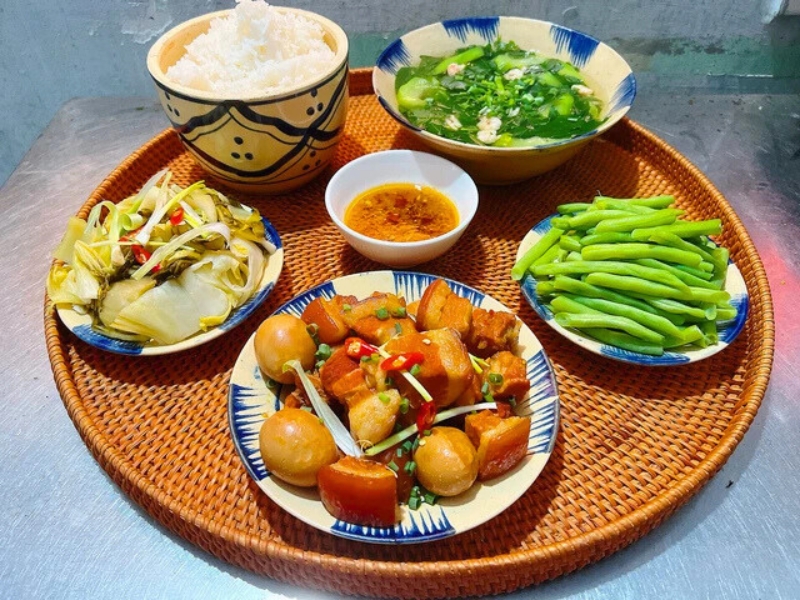
Rice, the essential base for preparing Com, present at every Vietnamese meal
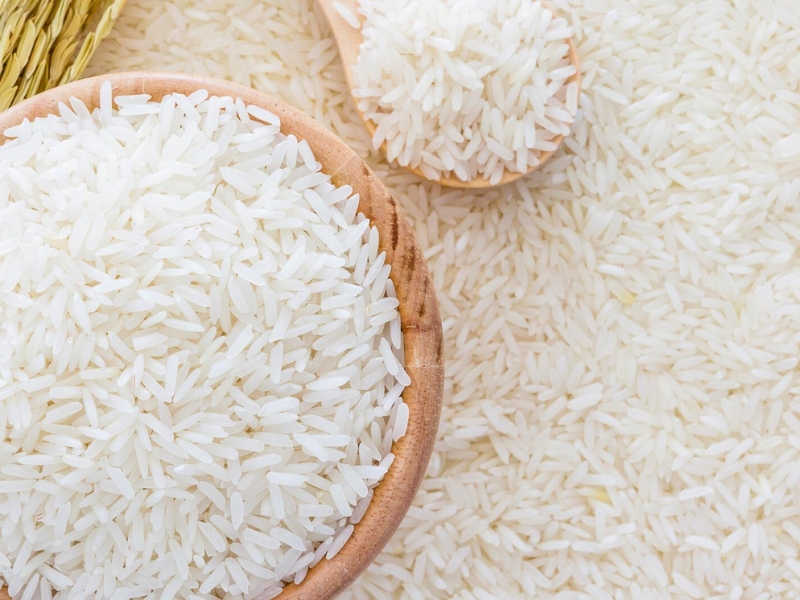
Just as bread in France, rice accompanies almost all Vietnamese meals. Present from morning to evening, it is far more than a simple food: it is the heart of Vietnamese culture. In Vietnam, rice goes beyond gastronomy. It is everywhere: in religious offerings, in family celebrations, in wedding ceremonies or in traditional crafts. This sacred grain symbolizes abundance, purity and prosperity. In the language itself, “to eat” is said as “ăn cơm,” literally “eat rice,” proof of its central place in daily life.
White rice is indispensable in every Vietnamese meal
For over 7,000 years, rice has been cultivated in Southeast Asia, where it represents a vital source of nourishment for more than half the world’s population. In Vietnam, rice cultivation has elevated itself to a true way of life: it shapes landscapes, traditions and the rhythm of the seasons. Where there is rice, there are inevitably rice fields – these flooded or terraced fields where all the ancestral knowledge of Vietnamese farmers unfolds. They are the reflection of a perfect balance between man and nature, a symbol of the perseverance and harmony that have characterized Vietnamese society for centuries.
Rice and the Vietnamese
In Vietnam, rice is not simply a food: it is the beating heart of daily life and culture.
For centuries, the Vietnamese have lived to the rhythm of the rice fields, in an intimate bond with the land and the seasons.
Planting, harvesting, sharing rice – these gestures repeated by generations shape not only the landscape, but also the soul of the country.
Everywhere, from the mountains of the North to the plains of the Mekong Delta, rice accompanies every moment of life.
It is found on every table, in a thousand familiar forms: fragrant grains of rice, thin noodles, crispy cakes, light soups or artisanal rice alcohol.
Its presence is so natural that it connects the most remote villages to major cities without distinction.
The way it is prepared also tells a story of a way of life.
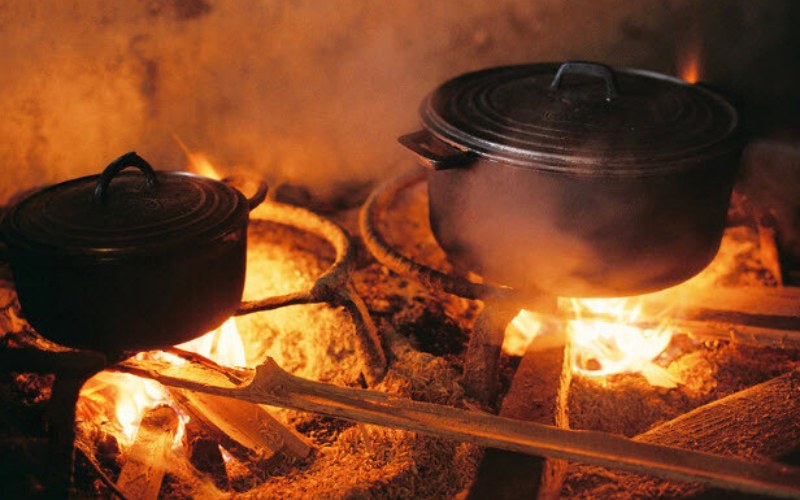
In some rural families, rice is still cooked over a wood fire, leaving a warm and reassuring aroma floating in the air.
When the flame is too strong, a thin golden and crispy crust forms on the bottom of the pot: the “cơm cháy,” a small treat loved by all.
Today, most families use an electric rice cooker, practical and fast, but the spirit remains the same: rice brings together, unites, and symbolizes the warmth of the Vietnamese hearth.
Rice far exceeds the kitchen: it has a deep symbolic and emotional value. During weddings, rice grains are still thrown on the newlyweds to wish them happiness and prosperity.
During traditional festivals, it is part of offerings to ancestors, as a thank you to the nurturing earth and to generations past.
Even in language, its importance is inscribed: in Vietnamese, “ăn cơm” means “eat rice,” but it simply means “eat.” An everyday word, but also a symbol: that of a people united by work, simplicity and gratitude toward nature.
Vietnamese Agriculture
Rice has been at the center of Vietnamese agriculture for centuries. In this country crossed by rivers, deltas and mountains, it nourishes the population, shapes landscapes and marks the seasons. Vietnam cultivates thousands of varieties of rice, in different colors and textures – white, brown, red, black or amber – and each region has its own methods and traditions of cultivation.
Two major types of rice cultivation stand out. Lowland rice, or wet rice, is the most common. It grows in the flooded fields of the Mekong Delta and the Red River Delta, where the warm and humid climate allows up to two or three harvests per year. In contrast, mountain rice is cultivated on terraced rice fields, carved on the hillsides by ethnic groups of the North. These spectacular landscapes, particularly in Sapa, Mu Cang Chai or Hoang Su Phi, testify to the ingenuity and patience of cultivators who managed to tame steep terrain.
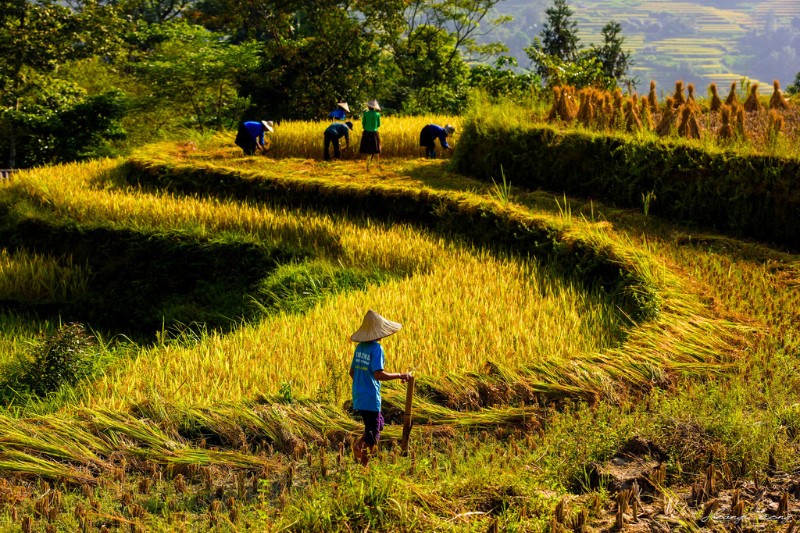
Rice cultivation follows a precise cycle adapted to Vietnam’s climate. First comes the flooded season (April-May), during which the rice fields are submerged to fertilize the soil and prepare for planting. Then, during the green period (June-July), young seedlings are transplanted and the fields cover themselves with brilliant green. Finally, the harvest season (August-October) transforms the landscapes into a golden sea. In villages, this period is marked by intense and joyful activity: families work together in the fields, laughter and songs accompany the rhythm of the sickles.
Vietnamese rice cultivation remains an ancestral and collective endeavor, passed down from generation to generation. Every gesture, from transplanting to harvesting, bears witness to a close relationship between man and nature. In rural regions, these agricultural tasks are often accompanied by village festivals and rituals of gratitude toward the land, reminding us that rice is not just a resource, but a true symbol of life and harmony in Vietnam.
Here is a small video about rice harvesting:
Vietnam’s Most Beautiful Mountain Rice Fields
Sapa
Sapa’s Highlights
Perched in the majestic north of Vietnam, Sapa captivates travelers with the enchanting beauty of its fog-wrapped mountains, the freshness of its pure air and the gentleness of its pace of life. Situated at over 1,500 meters of altitude, this small peaceful town is often nicknamed “the roof of Vietnam,” surrounded by breathtaking landscapes.
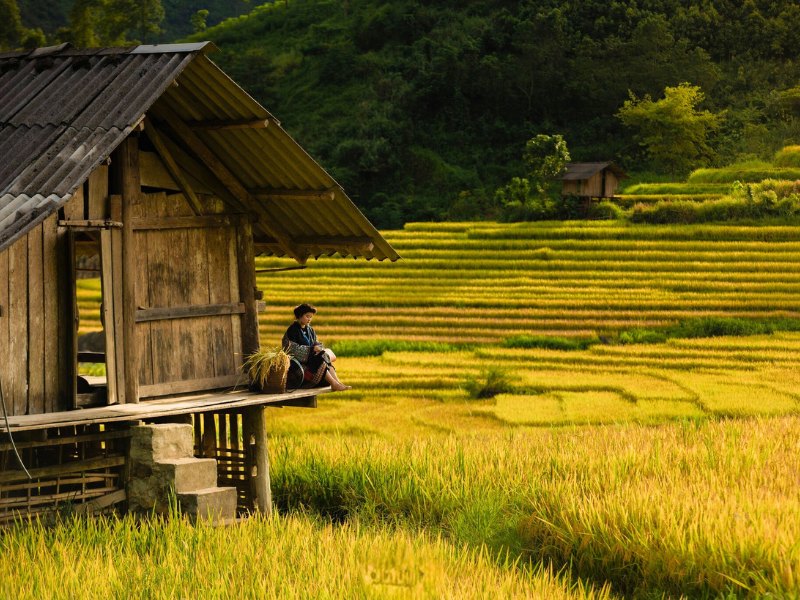
What makes Sapa famous are its superb terraced rice fields, carved for centuries on steep slopes by local ethnic minorities – Hmong, Dao, Tay, Giay, among others. Each terrace is the fruit of patient and meticulous work, shaped by hand, season after season. These immense staircases of green extend as far as the eye can see, transforming with the passing months into a changing picture where water reflections, tender greens and bright golds blend. The most emblematic rice fields are found in the Muong Hoa valley, between the town of Sapa and the majestic Fansipan mountain, nicknamed the Roof of Indochina.
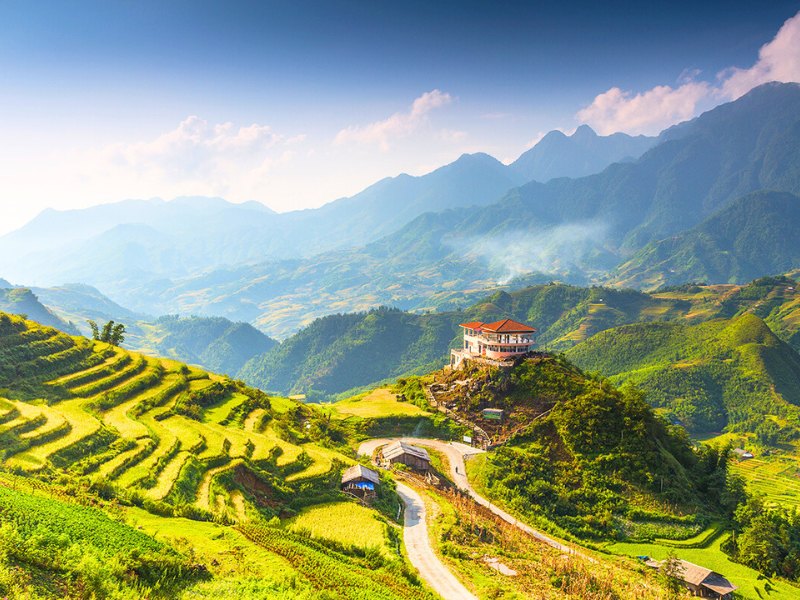
Muong Hoa Valley
A hike through this valley will offer you exceptional panoramas, but also unforgettable encounters: the inhabitants of mountain villages, dressed in their traditional costumes, cultivate rice, weave hemp and welcome visitors with sincere smiles. It is a rare immersion in the authentic life of mountain ethnic groups, where simplicity and natural beauty intertwine.
Best Time to Visit
Sapa is beautiful in every season, but the rice harvest season reveals all the magic of its landscapes. There is only one harvest per year, from late August to early October – the time when the rice fields adorn themselves with a thousand golden hues, offering a surprising visual spectacle.
- May-June: the terraces are flooded for planting. The mountains then become an immense mirror where the sky and clouds are reflected – a poetic moment, ideal for photography.
- July-August: the rice fields turn emerald green, a symbol of growth and vitality.
- Late September-early October: the harvest begins. The rice becomes golden, the inhabitants are active in the fields, and the air resonates with the sound of sickles and laughter. It is the most vibrant and photogenic period of the year.
? Travel Tip: September is ideal for combining hiking, photography and cultural immersion. The hills then undulate in the wind, bathed in golden light at every sunset.
How to Get to Sapa
Most travelers reach Sapa from Hanoi, located about 320 kilometers to the southeast. The journey itself is already an adventure, crossing valleys, rivers and mountain villages. Several options are available to you:
- By train
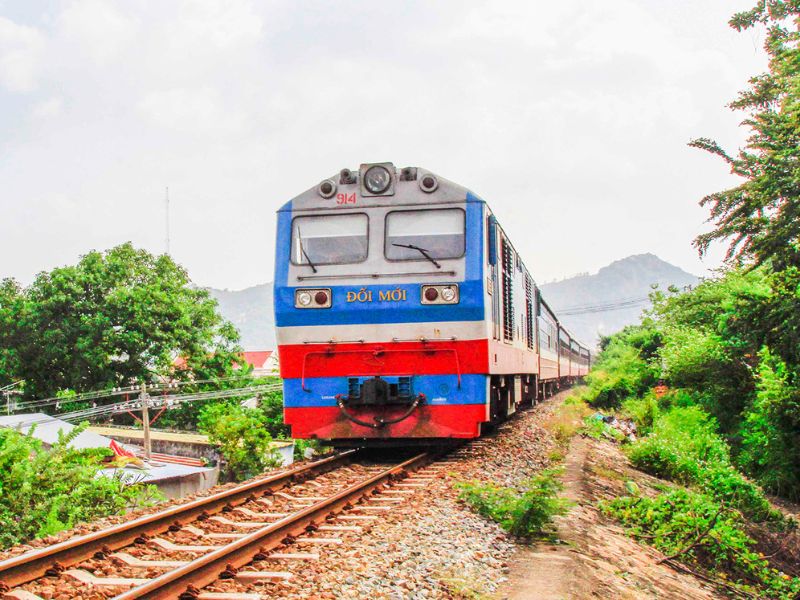
The overnight Hanoi – Lào Cai train is one of the most fascinating ways to reach Sapa. The journey lasts approximately 8-9 hours, followed by an additional hour of travel to reach the town. The cabins are comfortable, and the sunrise reveals the first mountain ridges in a soft and golden light – a magical moment for travelers seeking a romantic and authentic atmosphere.
- By bus
Daily buses depart from Hanoi at 6:30 am and 10:00 pm for a trip of approximately 6-7 hours. It is the most direct option, as the bus goes all the way to Sapa without a connection in Lào Cai. Modern sleeper buses are comfortable and air-conditioned, perfect for those wanting to arrive quickly and enjoy the day on site.
- By private vehicle
For greater freedom, opt for a private car with driver. The journey lasts about 5 hours, with the possibility of stopping in ethnic villages, at waterfalls or scenic viewpoints. It is the ideal option for travelers who want to explore at their own pace and savor the landscape without constraints.
Bac Ha
Bac Ha’s Highlights
Located about three hours’ drive from Sapa and 1 hour 40 minutes from Lào Cai, Bac Ha is a small peaceful town in northern Vietnam, nestled in a mountainous region still preserved. With approximately 7,000 inhabitants, this quiet village captivates travelers with its authentic atmosphere and the peaceful beauty of its landscapes. Less touristy and calmer than Sapa, Bac Ha seduces with its terraced rice fields and verdant hills, although these are more modest compared to those of Sapa. But the true treasure of Bac Ha lies in its famous Sunday market, one of the most colorful in Northern Vietnam.
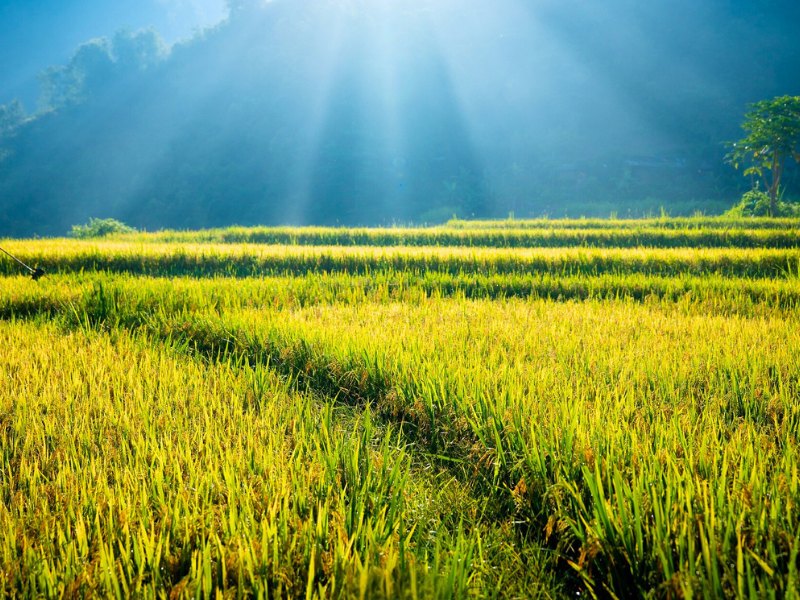
Each week, ethnic minorities from the surrounding mountains – Flower Hmong, Tay, Dao, Nung – come to town to sell their products: fruit, embroidered fabrics, spices, animals and local crafts. The atmosphere is lively, vibrant, full of smiles and colors. Bac Ha is also an excellent starting point for quiet hikes through the surrounding ethnic villages. It is a great opportunity to discover the daily life of the inhabitants, share a local meal or simply admire the peaceful rhythm of mountain life.
Best Time to Visit
Like Sapa, the rice harvest in Bac Ha takes place from late August to early October, when the rice fields take on their finest golden hues. However, March and April offer an interesting alternative: the climate is mild and pleasant, nature is in full bloom, and the mountains are bathed in spring light. It is also the ideal season to explore local markets in a calmer atmosphere.
How to Get to Bac Ha
- By train
The most picturesque means is to take the overnight Hanoi – Lào Cai train, a journey of approximately 8-9 hours through the mountains of the north. From Lào Cai station, you need an additional 1 hour 40 minutes of travel to reach Bac Ha. Numerous buses or minibuses ensure easy connections.
- By bus
Regular buses depart daily from Hanoi to Bac Ha. The direct journey lasts approximately 7-8 hours. It is a comfortable and economical option, ideal for travelers wishing to reach Bac Ha without going through Lào Cai.
- By private vehicle
If you prefer flexibility, opt for a private transfer. The journey also lasts 7-8 hours, but you can stop freely to admire the scenery, visit a local market or take photos along the way.
Bac Ha is a place apart, more discreet but profoundly authentic. Here, the charm does not lie in the crowds or the grandeur of the landscapes, but in the simplicity of mountain life, in the colors of ethnic markets and in the warm welcome of the inhabitants.
Mu Cang Chai
Mu Cang Chai’s Highlights
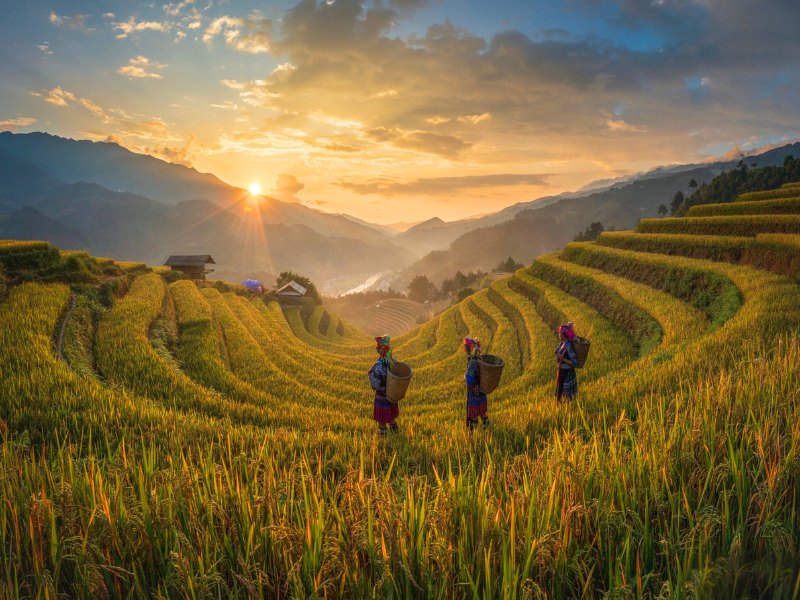
Mu Cang Chai
Located in the mountainous province of Yen Bai, about 280 km from Hanoi, Mu Cang Chai is considered one of the largest rice granaries in Vietnam and undoubtedly one of the most spectacular in Asia. This rural district, still little frequented by mass tourism, hosts more than 500 hectares of terraced rice fields distributed among the communes of La Pan Tan, Che Cu Nha and De Xu Phinh – classified as national heritage for their exceptional beauty. These rice fields, carved on the mountainsides by the Black Hmong, draw majestic curves following the natural relief. They offer a spectacle both grand and soothing, where sunlight makes the fields sparkle like waves of gold. Nature lovers and photographers will find a true visual paradise here, far from urban bustle.
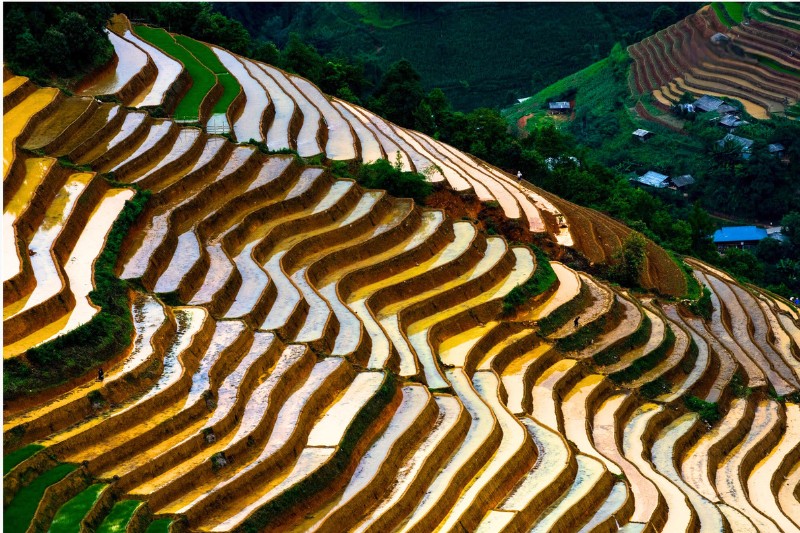
La Pan Tan
Here, everything breathes simplicity and serenity: children laugh on the paths, women work in the fields dressed in their colorful costumes, and mountains extend as far as the eye can see.
Best Time to Visit
The best time to admire the terraced rice fields of Mu Cang Chai is from September to October, during the harvest season. During this period, the fields take on a splendid golden hue, especially at sunrise or sunset. From the heights, the panorama is breathtaking: an ocean of gold rippling in the light. The air smells of ripe rice, and the villages vibrate with peaceful activity – an ideal atmosphere for capturing spectacular photographs.
? Photography Tip: the best viewpoints are at La Pan Tan and Che Cu Nha, where the terraces draw the most elegant shapes.
How to Get to Mu Cang Chai
Located about 7 hours’ drive from Hanoi, Mu Cang Chai is accessible primarily by road. The most practical and comfortable means is to rent a private vehicle with a driver. This journey, although long, passes through sublime landscapes – verdant valleys, forests and small villages – and offers the opportunity for several scenic stops along the way.
There is no direct railway line to Mu Cang Chai, but several regular and economical buses depart daily from Hanoi. The bus journey, however, takes a bit longer than the car trip, but remains a good option for travelers with a limited budget.
Still preserved from mass tourism, Mu Cang Chai is one of the rare places where you can feel the authentic life of Vietnam’s mountains. Among golden rice fields, the smiles of the inhabitants and the raw beauty of the landscapes, it is a destination that touches the hearts of those who love nature and tranquility.
Hoang Su Phi
Hoang Su Phi’s Highlights
Located in the mountainous province of Ha Giang, about 300 km from Hanoi, the terraced rice fields of Hoang Su Phi are among the most spectacular and vertiginous in Vietnam. Here, karst mountains extend as far as the eye can see, offering a panorama of impressive beauty where rice fields seem suspended among the clouds. The communes of Ban Luoc and Ban Phung are particularly renowned: their rice fields rise like immense golden staircases up to the mountain peaks.
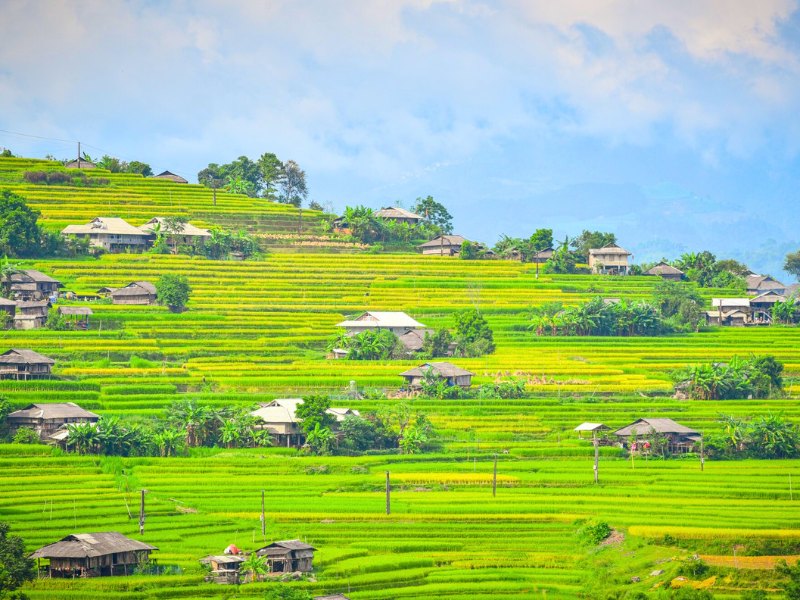
From the center of Ban Phung, the view is breathtaking – an ocean of terraces winding through the valleys and hills. Six villages deserve a stop to admire these exceptional landscapes: Nam Ty, Thong Nguyen, Luoc, San Sa Ho, Phung and Ho Thau. Each village reveals a different face of local life, with its markets, its stilt houses and its carefully tended fields. These rice fields have been shaped for centuries by the ethnic minorities Nung, La Chi and Dao, who continue to cultivate the land according to ancestral methods. Their patient work and respect for nature have carved out one of Vietnam’s most beautiful agricultural landscapes.
Best Time to Visit
Two periods of the year reveal all the magnificence of Hoang Su Phi:
- May-June: the transplanting season. The rice fields are full of water and sparkle in the sun, forming natural mirrors that reflect the sky and clouds. The tender green of young seedlings gives the landscape an incomparable softness.
- September-October: the harvest season. The rice fields turn golden yellow, and the atmosphere comes alive with villages harvesting rice by hand. It is the most colorful and vibrant time of the year, ideal for photographers and lovers of authenticity.
? Suggestion: climb to Ban Phung at dawn – the mist gently rises above the golden terraces, a magical spectacle.
How to Get to Hoang Su Phi:
From Hanoi, the road to Hoang Su Phi extends for about 300 kilometers, or 7-8 hours of travel.
- By bus: regular buses depart daily from Hanoi bus station toward Ha Giang. From there, another approximately 80 km (2-3 hours’ drive) is needed to reach Hoang Su Phi.
- By private vehicle: it is the most comfortable and flexible option. The direct journey lasts about 7 hours, with the possibility of making photographic stops or breaks in local villages.
Although public transportation is available, the journey remains long and sometimes challenging. To fully enjoy the journey and the grand landscapes of northern Vietnam, it is strongly recommended to opt for a private vehicle with a driver.
Still preserved from mass tourism, Hoang Su Phi offers an authentic and relaxing experience. Among mountains wrapped in mist, deep valleys and endless terraces, it is a place where nature expresses all its power and grace. Encounters with local populations, the raw beauty of the landscapes and the peaceful atmosphere make this region a true paradise for travelers seeking authenticity.
Pu Luong
Pu Luong’s Highlights
Nestled between the provinces of Hoa Binh and Thanh Hoa, about 160 km southwest of Hanoi, the Pu Luong Nature Reserve is a true jewel of northern Vietnam. Here, karst mountains covered in jungle interweave with verdant valleys and terraced rice fields of splendid beauty. It is a region where nature, culture and biodiversity coexist in perfect harmony. Created in 1999 to preserve the ecological richness of the area, the reserve extends from Mai Chau to Cuc Phuong National Park.
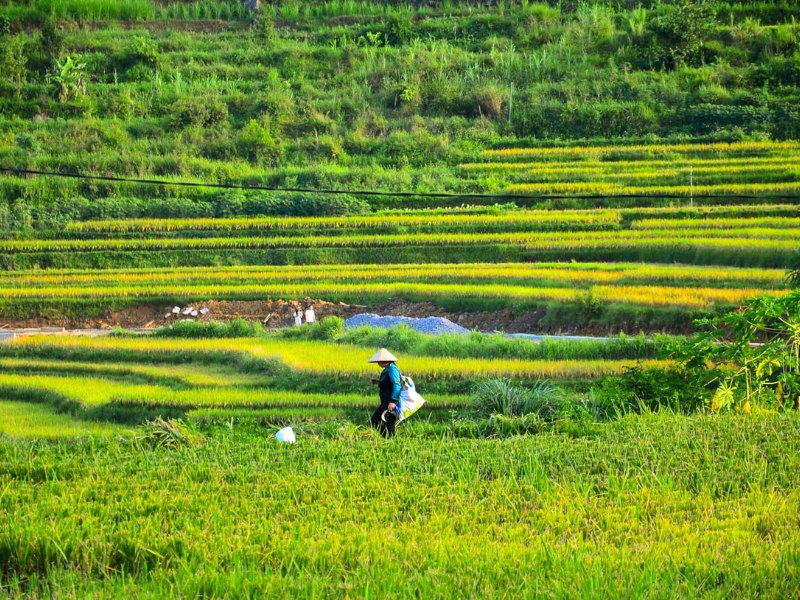
Among virgin forests, clear rivers and terraced rice fields, Pu Luong offers a picture of rare tranquility, ideal for trekking and nature-based stays. Still spared from mass tourism, the region seduces with its authenticity, its traditional villages and the warm welcome of its inhabitants, particularly the Thai and Muong ethnic groups.
Best Time to Visit
The best time to discover Pu Luong is from September to November, during the harvest season. The rice fields then assume golden hues and blend magnificently with the green of the mountains – a dazzling spectacle for lovers of landscapes and photography.
Another ideal period is from February to May, when the rice fields are a brilliant green and the climate remains mild and pleasant. It is the perfect season for hiking through the valleys and observing rural life that resumes after winter.
Vietnam’s Most Beautiful Lowland Rice Fields
Tam Coc
Tam Coc’s Highlights
Located just 100 kilometers south of Hanoi, in Ninh Binh province, the Tam Coc region enchants visitors with its spectacular karst landscapes and peaceful rural atmosphere. Surrounded by sugar-loaf shaped mountains, rice fields and winding rivers, Tam Coc offers a setting worthy of a traditional Vietnamese painting.
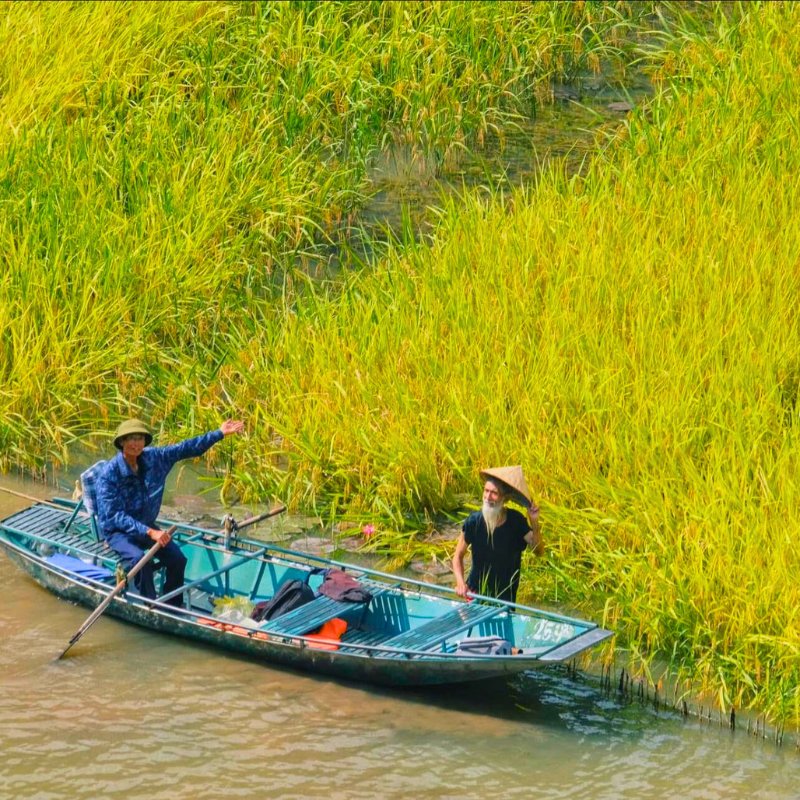
Nicknamed the “terrestrial Halong Bay,” Tam Coc is ideally discovered by boat, guided by skilled local rowers who glide the boat among the flooded rice fields and limestone caves. This peaceful boat ride allows you to contemplate the striking contrast between the brilliant green of the fields and the silvery-gray of the cliffs. For a different experience, you can also explore the region by bicycle: a pleasant way to pass through small villages, admire rural life and breathe in the quiet of deep Vietnam.
Best Time to Visit
The best time to discover Tam Coc is from May to September, when the rice fields are flooded and a brilliant green. By late September, the fields take on golden hues that blend with the green of the mountains and the blue of the sky, creating a picturesque and relaxing panorama. It is also the ideal time for a boat ride or a bike outing in the surroundings.
? Tip: for spectacular photos, climb to the Hang Mua viewpoint, especially at sunrise or sunset.
How to Get to Tam Coc
Tam Coc is located about 2 hours’ drive from Hanoi and can be easily visited on a day trip. Numerous tourist buses and minibuses depart throughout the day from Hanoi to Ninh Binh or directly to Tam Coc. It is also possible to rent a private car for greater comfort and flexibility, especially if you wish to combine the visit with the Trang An caves or Bich Dong Pagoda.
Tam Coc is an unmissable stop for those wishing to discover Vietnam’s lowland rice fields. Between aquatic landscapes, karst mountains and traditional villages, the place seduces with its calm, natural beauty and rural authenticity. It is a perfect destination for escaping the city and surrendering to the peaceful rhythm of the Vietnamese countryside.
The Impact of Tourism on Vietnamese Agriculture
The success of Vietnam’s rice fields and the rise of tourism in rural regions have brought many changes. In some places, you see modern constructions rising up that sometimes jar with the quiet charm of the mountains. Many farmers, attracted by new opportunities, have left their fields to open a guesthouse or a small family restaurant to welcome travelers. However, rice cultivation continues to beat to the rhythm of the country. The work of the land, the seasons, the gestures passed down through generations remain present in daily life. Rice is part of Vietnam’s soul: it connects people to nature, nourishes, unites. Although tourism gradually transforms these regions, traditions remain strong. The inhabitants adapt, find a balance, but preserve this deep bond with their origins. Their respect for the land and attachment to simplicity still protect the landscapes from overly abrupt modernization.
Vietnam’s rice fields are not just a symbol of rural life, they represent the very soul of the country. From the enchanting terraces of Sapa to the fertile plains of the Mekong Delta, each landscape tells a story of work, harmony and timeless beauty. Exploring these rice fields means embarking on a journey to discover an authentic Vietnam, where nature and culture intertwine with grace. An unforgettable journey, filled with serenity and emotion.